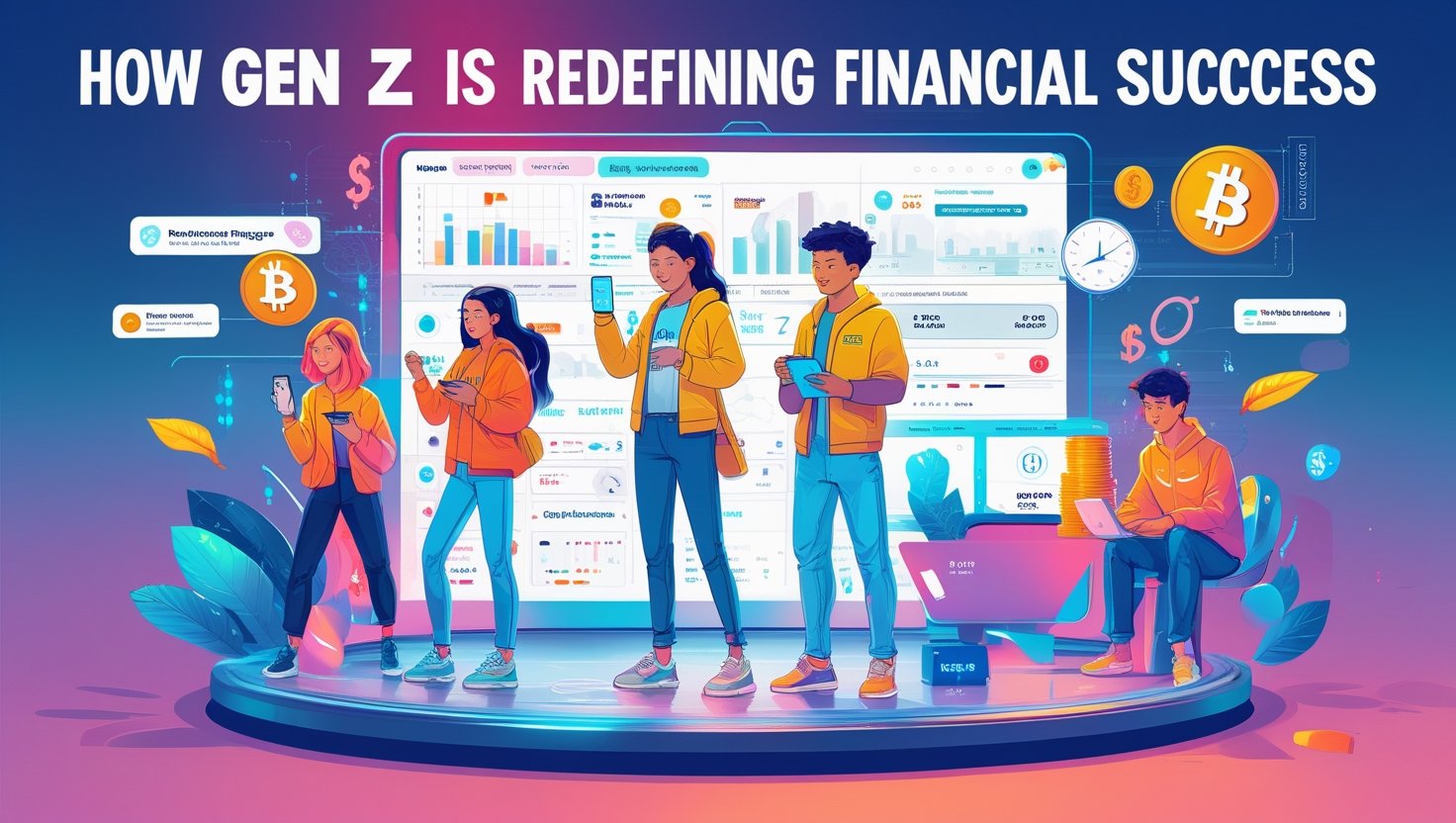
Gen Z means the generation born after 1997, who have now entered adulthood, and their approach to finance is completely different from the older generation. These people are growing up at a time when digital technology is a part of everything, and they have quickly faced serious challenges like economic uncertainty, global pandemics, student loans, and high inflation. While the older generation considered financial success limited only to a stable job, home, and retirement funds, the perspective of Gen Z is more flexible and purpose-driven. This generation gives more importance to financial freedom over traditional milestones like a big house or a luxury car.
For Gen Z, success means only it is not about earning money but having control over one’s time, remaining mentally peaceful, and having such a lifestyle where they do not compromise with their values. The digital world has made finance accessible for them. They got access to financial apps, side hustles, and investment tools at an age when earlier people found even basic budgeting difficult. Generation Z takes every decision with social awareness, and this generation wants to show that not only luxury but freedom, purpose, and self-care can also be achieved without money. This introduction is the first step towards the new approach of this generation, where we are about to understand how this generation has changed the financial world. I am redefining the way.
From Wealth Accumulation to Financial Freedom:
The biggest specialty of Gen Z is that their focus is not just on accumulating money but on achieving financial freedom. While in earlier times people considered success to be when they had their own home, luxury car, and a strong retirement plan, Gen Z gives second priority to such goals. For them, it is more important to be able to make their own life decisions, lead a stress-free life, and have authority over their time than to accumulate wealth. For these people, money is a tool that gives them freedom and not a status symbol. Gen Z people prefer flexible jobs. Remote. Through work and passive income sources, they invest their time and energy in things that are meaningful to them.
This generation moves away from materialism and considers experiences, purpose and mental health as a part of the financial journey They believe that if you are not emotionally and mentally healthy, money becomes just a burden Hence they move towards conscious and value-based spending This generation wants to balance present happiness over long-term security and hence they are challenging traditional expectations For Gen Z, success means control, peace and flexibility and they want to achieve all this through their decisions This value shift is giving a new thinking to the entire financial culture Where money is not the end goal but has become a means of freedom.
The Role of Technology in Gen Z’s Financial Journey:
The financial journey of Gen Z is deeply connected with technology. They are the breed that has grown up with digital devices. They have used mobile apps, online banking, cryptocurrency, and robo-advisors so commonly that all this has become a part of their normal lifestyle. Today’s Gen Z keeps track of all their expenses through individual budgeting apps and follows finance influencers on social media platforms like YouTube, TikTok, and Instagram for financial literacy. They trust fintech platforms more than traditional banks as they offer them transparency, speed, and convenience.
For Gen Z, investing in the stock market or creating a crypto wallet is not a complex process but a simple part of their routine. Part of this is that their digital exposure helps them understand financial tools and concepts at an early age and their decision making is fast and data-driven With the help of technology, this generation feels in control of their money and has real-time information that helps them make smart and timely financial choices Gen Z has made finance interactive, engaging and accessible by removing it from the traditional and boring subject and hence this generation feels more empowered to pursue their financial goals Technology has increased both their confidence and awareness.
Side Hustles, Freelancing, and Non-Traditional Income Paths:
The financial vision of Gen Z is not limited to just one fixed job. They believe in multiple income streams and secure their financial independence through side hustles, freelancing, and the gig economy. For them, earning money from just one job is an outdated idea. They monetize their skills and interests such as graphic design, content creation, affiliate marketing, or tutoring. They have developed new ways of earning money for themselves using digital platforms. Whereas earlier people would visit offices with their CVs to find jobs, Gen Z opens their laptops and finds clients in any corner of the world.
Freelancing websites like Upwork, Fiverr, and People Per Hour have become a powerful source of income for them. These people prefer flexible hours and location independence and consider earning money from their passion more rewarding. Freedom and autonomy are very important for them, and the traditional 9 5 job restricts this freedom. That is why this breed explores non-traditional paths. Their focus is to do work that is meaningful and also gives money. Side hustle has become not just an extra income but also a means of self-worth, skill-building, and long-term stability for them. All this reflects the new financial mindset of Gen Z.
Mindful Spending and Financial Wellness:
Gen Z takes a very thoughtful and mindful approach when it comes to money These people analyse their every expense not just based on need but according to their values and priorities For them, money is not just a means of purchasing but a tool through which they can make their life better These people try to avoid emotional and impulsive spending and track their finances using budgeting tools This generation considers mental health and financial wellness to be interconnected For them a balanced and peaceful life is possible when there is less tension regarding money For these people stay away from unnecessary loans and debt and take financial literacy seriously Ethical spending and conscious consumerism are also important for Gen Z.
These people support local products, eco-friendly brands and socially responsible companies They believe that money is not just a source of happiness but if it is managed intelligently, it removes stress and makes life simple Gen Z adopts saving money, investing and creating emergency funds from an early age and in this way they make their financial journey sustainable Mindful spending is not a financial choice for them but has become a lifestyle in which they feel control and peace in their lives.
Conclusion:
Gen Z has challenged old concepts of financial success and has come up with a new definition. Now, success is not just about making more money or leading a luxurious lifestyle. Now the concept has become more holistic and personal. For this generation, success means freedom, mental peace, purpose, and control over time. Gen Z people set goals for themselves that make them feel happy and fulfilled in every aspect of life. Their approach is based on long-term planning, but they do not ignore short-term happiness and self-care. They incorporate their emotions and values in their financial decisions, and this mindset brings deeper satisfaction for them. Technology, mindful choices, multiple income.
Through resources and value-based spending, Gen Z is making their lives purposeful and flexible. Their vision is that money should be a tool that lets them live longer rather than a goal that constrains them. In today’s era, where everything is undergoing rapid change, Gen Z has brought a refreshing and empowering shift in the financial culture that will inspire the coming generations as well. This generation is teaching us that real financial success is not just in numbers but is hidden in the quality and control of life.