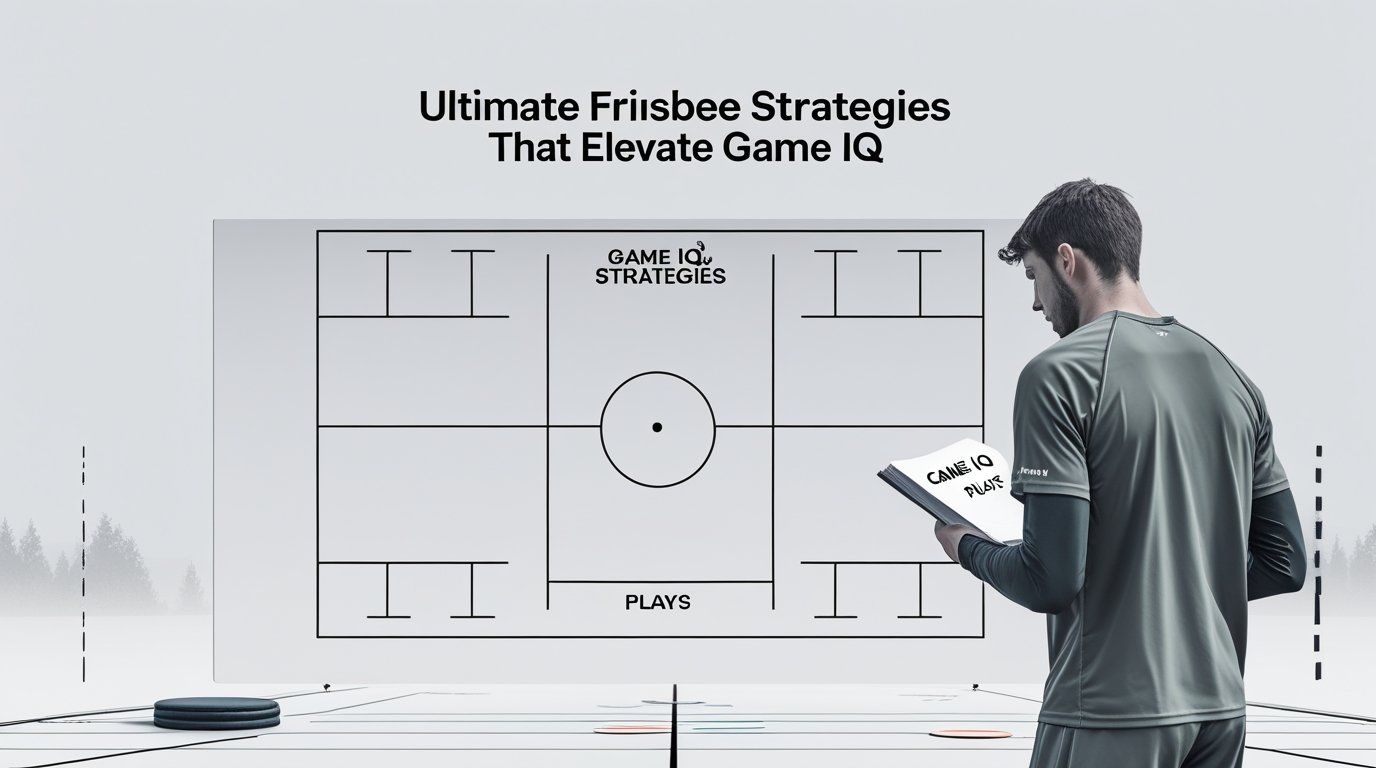
I used to think speed was everything. I was wrong. Winning Ultimate Frisbee requires game IQ, not just athleticism. It’s about geometry, discipline, and thinking ahead. This is my personal guide to the Ultimate Frisbee strategies that helped boost game performance and made me a smarter player.
1. Why You Must Never Let Them Throw to the Open Side:
The single most fundamental concept in Ultimate Frisbee strategies is the force side. If you don’t master this, every other defensive plan you try will fall apart. This was the first thing my coach drilled into my head.
Before I learned this, I just ran after my assigned player. The result was chaos; the opposing thrower had the entire field to work with.
The Defensive Cornerstone:
The force side strategy is simple: when you are marking (guarding) the thrower, you position your body so that you are forcing them to throw the disc to one half of the field (the “forced” side or “sideline” side), while shutting down the other half (the “open” side).
- The Force: You stand on the open side, extending your arm to block the easy throw into that large, open space.
- The Goal: You force the thrower to make riskier throws along the sideline, which limits the angle and distance of their throws, making defense far easier for the rest of your team.
This is not just about blocking one pass; it’s about controlling the entire field. The entire team defense is built around the knowledge that the disc must go to the force side.
The Team Strategy Impact:
Once our team mastered the consistent force side, our defense became instantly smarter:
- Prediction: Every defender on the field knows the thrower’s options have been cut in half. We can anticipate the target area.
- Containment: The defense can shift to stack players more heavily on the forced side, closing down the only viable space.
- Pressure: Throwers start to panic because they are always throwing into a tighter, more defended window. This leads to hucks (long, risky throws) or costly turnovers.
This simple, disciplined defensive strategy is the core tool you need to boost game performance because it takes away the offensive team’s greatest asset: space. You control the space by controlling the angle, and that all starts with an unbreakable force side.
2. The Vertical Stack Foundation:
If the force side is the cornerstone of defense, the vertical stack is the foundation of effective offense. This was the moment I realized that running is useless if you’re just running in random spots. Ultimate Frisbee strategies are about structured movement.
The Problem with Clumped Offense:
When I started, we just kind of gathered near the disc. We were all clumped together, making it easy for the defense to guard two or three players with just one defender. The disc handler had no open space to throw into, leading to short, panicked throws and quick turnovers.
The vertical stack solved this by creating order and space.
The Vertical Stack Setup:
The setup is simple geometry:
- The Stack: Most of the cutters (the players trying to get open) line up down the middle of the field, starting about 10-15 yards deep from the disc handler, forming a “stack.”
- The Space: This movement instantly opens up the entire throwing lane right in front of the disc handler, called the “cutting lane.”
- The Order: Only the player at the front of the stack (the “front cutter”) is allowed to enter that empty lane. They make a sharp cut (called the “in cut”) toward the disc.
Unlocking Effective Cutting Patterns:
The vertical stack works because it ensures that only one person is cutting at a time into the wide-open space. If the front cutter doesn’t get the disc within 3-4 seconds, they “clear out” by sprinting back to the stack or out to the side, maintaining the space for the next cutter in line.
This creates clear, one-on-one matchups and structured cutting patterns. The defender knows where the cut will happen (in the lane), but the cutter has the advantage of choosing when and how to break hard toward the disc.
By using the vertical stack, we replaced chaotic movement with disciplined, sequential cutting patterns that immediately started to elevate game IQ and allowed us to hold the disc for much longer.
3. How to Avoid Messing Up the Stack:
Mastering the vertical stack (Section 2) gave our team space, but we still struggled. We would make a few good throws, and then suddenly, the disc handler would panic, the field would get crowded, and we’d turn the disc over.
I realized the problem wasn’t the cut itself; it was the clearing cut discipline. This is arguably the most critical and often ignored of all Ultimate Frisbee strategies, but it is essential to elevate game IQ and keep the offensive flow alive.
The Space Killer:
When a cutter (the player trying to get open) sprints into the cutting lane, and the disc handler doesn’t throw it, the cutter has failed their job, but their job is not over. The mistake my team made was that the cutter would stop right there, maybe take a few steps back, or just stand still, frustrated.
This is the space killer. That cutter is now blocking the cutting lane for the next person in the vertical stack. The entire offensive structure breaks down, and the thrower is left with no easy options, which immediately limits their options on the force side.
The “Sack Lunch” Rule:
My coach had a simple, aggressive rule: The Clearing Cut Discipline.
- Failure Protocol: If you sprint into the lane for a cut and the disc handler doesn’t throw, you must immediately sprint out of the cutting lane and back toward the stack, without hesitation. No stopping, no pouting.
- Maintain Space: Your job after a failed cut is to maintain the integrity of the vertical stack by creating maximum space for the next cutter. The defense needs to chase you out of the lane, which opens up more space for the subsequent cut.
We called it the “Sack Lunch” rule, the cut is finished, put it in the bag, and move on.
Elevating Game IQ Through Discipline:
This discipline is what truly boosts game performance. It transforms the offense from a series of individual cuts into a fluid, relentless system.
- Relentless Pressure: The defense never gets a rest because as soon as one cutter clears, the next one is already sprinting into the fresh, open space.
- Increased Options: The disc handler always sees an open, predictable lane, which reduces the chance of a panicked throw.
- Team Trust: It builds team trust. The disc handler trusts that the cutter will always clear, and the next cutter trusts that the lane will always be open.
Mastering the clear is the mark of a high-game IQ player. It means sacrificing your personal desire to catch the disc for the benefit of the team’s structure. It’s subtle, but it’s the glue that holds all offensive Ultimate Frisbee strategies together.
4. Using the Long Throw to Open Up the Short Game:
When I first started, I thought the long, deep throw was just a desperate Hail Mary or a pure scoring play. I quickly learned a key piece of high-game IQ strategy: the deep cut is not primarily for catching the disc; it’s a tool to manipulate the defense and create space for easy throws.
This strategic thinking, using one action to set up a totally different action, was critical to learning advanced Ultimate Frisbee strategies and truly helped boost game performance.
The Defender’s Dilemma:
When we’re running the vertical stack, the disc handler is constantly looking for the open person in the cutting lane. The defense knows this. If the defense doesn’t feel threatened by the long throw, the deep defenders will “poach” or creep forward to aggressively defend the short cuts (the “under” cuts). This clogs the cutting lane (Section 3) and shuts down the offense.
The deep cut is designed to stop this.
The Subversion Technique:
The most valuable cutting patterns are those that force the defense to make a tough choice.
- Threaten Deep: The back cutter (the person furthest from the disc in the vertical stack) makes a full-speed, aggressive cut straight downfield. They aren’t necessarily open, but they are threatening to get open.
- The Defender’s Reaction: The defender guarding the deep cutter must run with them. If they don’t, it’s an easy score. This action effectively pulls the defense back, like pulling on a string.
- Opening the Under: By dragging the defenders deep, the deep cut suddenly creates massive, empty space in the short cutting lane. The next cutter in the stack, seeing that space, can make an effortless 5-yard “under” cut for an easy, safe completion.
The deep cut failed to get the disc, but it succeeded in its strategic goal: creating an easy, low-risk completion for a teammate. This type of selflessness and strategic understanding is what separates a runner from a high-game IQ player.
The Power of the Fake:
I learned to use the “fake deep” cut to maximize this effect. I sprint hard for ten yards deep, making my defender panic and start backing pedaling, and then I slam on the brakes and cut hard under (back towards the disc). The defender, who is sprinting deep, can’t change direction fast enough, and I get an easy, open throw. It’s using the threat of the long game to win the short game.
5. The Defensive Rotation Rule:
Early in my Ultimate Frisbee career, my defensive philosophy was simple: “Guard my person.” If my assigned cutter got open, I’d yell at them or the thrower. If someone else’s person got open, I’d watch the score. This lack of teamwork in defense was a massive hole in our Ultimate Frisbee strategies.
I learned that defense is not a series of individual battles; it’s a team structure designed to prevent scoring, and that requires constant defensive rotations and communication to truly boost game performance.
The Vulnerability of Isolation:
If your defender is faster than you or makes a perfectly timed cut, they will get open. In a true man-to-man defense, that means the opposing team gets a free disc. High-game IQ defense recognizes that when one person loses the battle, the team must immediately step in to secure the space.
The core principle is: Defend the space, not just the person.
The Poaching and Switching Protocol:
Defensive rotations are all about communicating and adjusting to protect the field geometry.
- The Poach (Help Defense): This is the highest-game IQ defensive move. I learned to look away from my own person and watch the weak side of the vertical stack (the side we aren’t “forcing” to, Section 1). If I saw a deep cut that was clearly beating my teammate, I would leave my person (who is likely trapped on the other side of the field) and sprint to the vulnerable space to intercept the throw or simply challenge the catch. This is a risk, but it’s a calculated one, designed to protect the most dangerous part of the field.
- The Switch (Communication): This happens when the offense crosses defenders (e.g., two cutters crisscross). Instead of both of us chasing our original assignments and running into each other, one defender yells “Switch!” and we seamlessly exchange assignments. The cutter doesn’t get a free run, and the defensive rotations maintain pressure.
Elevating Team IQ with Communication:
Executing these defensive rotations is impossible without constant, loud communication.
- “Force Middle!” (The mark reminding the thrower where to throw)
- “Help Deep!” (A defender warning a teammate that a deep cut is happening)
- “I Got Your Back!” (A defender poaching to cover a vulnerable area)
The goal of our Ultimate Frisbee strategies was no longer to prevent a catch, but to prevent the easy catch. By knowing when and where to step in for a teammate, we covered each other’s weaknesses and forced the offense to constantly throw into covered space. This collective awareness is the hallmark of high-level defensive game IQ.
6. How to Read the Defense Before You Cut:
After I mastered the structure of the vertical stack and the discipline of clearing (Sections 2 & 3), I still felt slow sometimes. I would make the right cut, but the defender would always be waiting for me. I realized I was just following the script, not reading the room.
The ultimate key to elevating game IQ is Field Vision, looking at the entire field and the entire defense before you decide where to run.
The “Look Up” Rule:
I learned to never initiate a cut with my head down. Before I start my sprint, I take a quick second to look up and scan three key things:
- The Mark: Where is the defender marking the thrower? This confirms the force side (Section 1) and tells me which half of the field is open for a throw.
- My Defender: Where are they positioned? Are they playing loose (allowing a short throw) or tight (expecting a deep throw)? If they are playing tight, a hard cut deep will force them to abandon their position. If they are playing loose, a quick cut under will burn them.
- The Poachers: Is anyone from the defense cheating to the center of the field (poaching)? If they are, I know the disc handler can punish that poach by throwing to the open sideline.
This habit of scanning the field transformed my cutting patterns. My cuts became reactive to the defense, not just a routine sequence.
Choosing the Most Punishing Cut:
A low-game IQ player makes the cut that they want to make. A high-game IQ player makes the cut that punishes the defense’s mistake.
- If the defense is covering the short game well, I use the deep cut to stretch them out (Section 4).
- If the defense is worried about the deep cut, I make a quick, short cut underneath.
By reading the field, I could select the most effective cut, the one that forced the defense to be uncomfortable. This ability to instantly process information and make an optimal choice is the final step in developing elite game IQ and mastering Ultimate Frisbee strategies.
Conclusion:
Ultimate Frisbee taught me that sheer effort is secondary to smart effort. By adopting core Ultimate Frisbee strategies, mastering the defensive force side, running disciplined cutting patterns in the vertical stack, and committing to defensive rotations, I stopped being just a runner. I started being a smart, strategic teammate. The rise of AI for grammar checking and these shifts didn’t just boost game performance; they gave me a higher game IQ, making the sport infinitely more rewarding.
FAQs:
1. What is the single most important defensive strategy?
Establishing a consistent force side to limit the thrower’s options to one half of the field.
2. What is the primary purpose of the vertical stack?
To create and maintain open space for clear, sequential cutting patterns.
3. What is the biggest mistake after a cutter misses a throw?
Stopping in the cutting lane instead of executing a quick clearing cut back to the stack.
4. Why should I practice deep cuts if I’m a slow runner?
The deep cut’s strategic goal is to pull defenders back, creating space for shorter, easier throws (to boost game performance).
5. What are defensive rotations?
The team action of switching assignments or “poaching” (help defense) to protect vulnerable space when a teammate is beaten.
6. How do I elevate my game IQ before making a cut?
By using Field Vision to scan the entire defense and identify where the defense is currently positioned incorrectly.