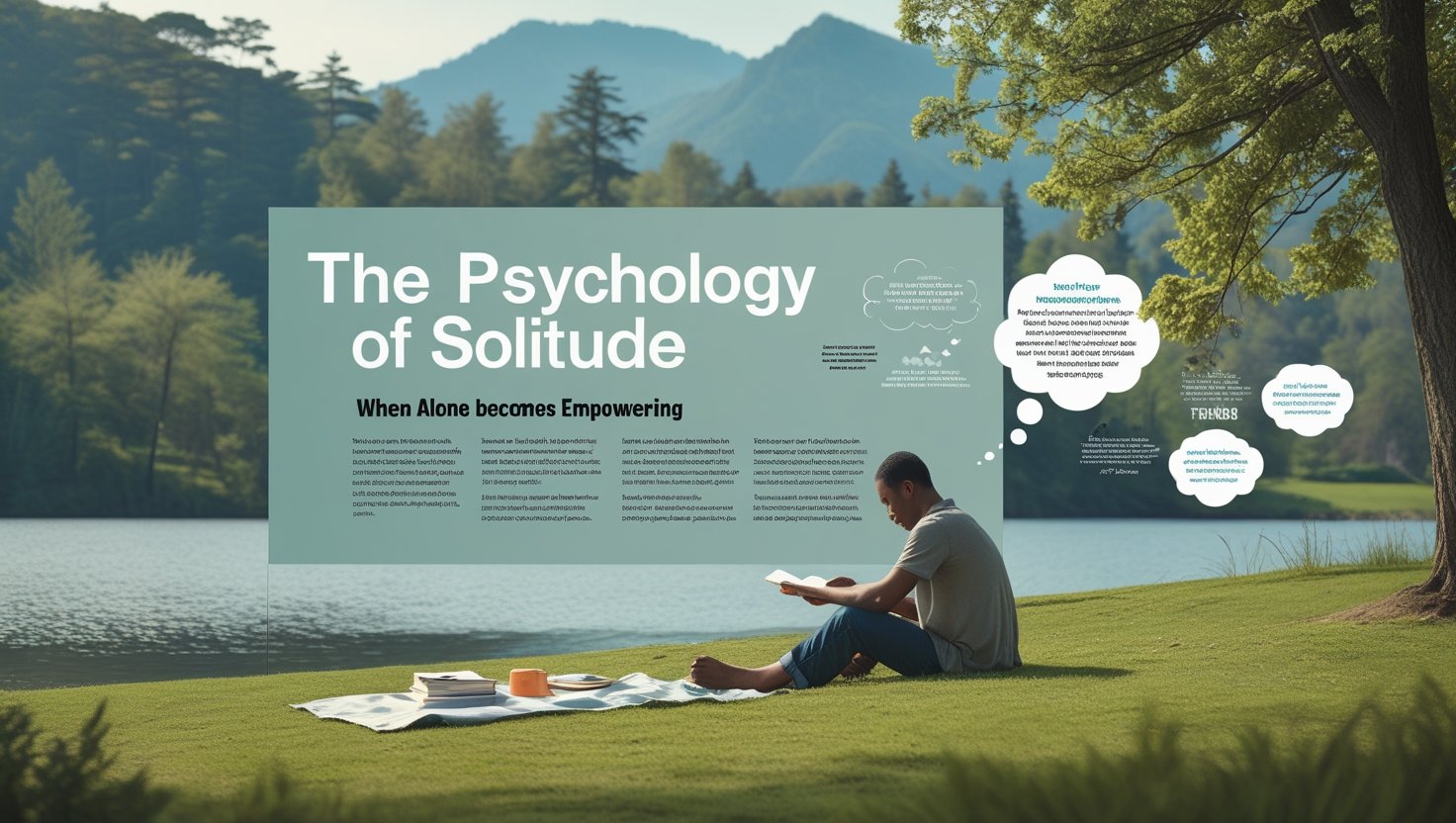
In today’s time, when there is pressure of some digital connection all the time, living alone is often deemed strange or negative, but in reality, solitude does not mean loneliness all the time. Often, people think that if a person is alone, they must be feeling lonely or dejected, whereas in reality, living alone can be a constructive and empowering experience for a person. In the beginning of this blog, we will try to understand how living alone has become a negative label in the modern world, when in reality this It can become a path of self-discovery and growth When a person starts spending time with himself, he begins to become aware of his thoughts, feelings and his real needs Where people often define themselves based on social media or people’s feedback, there solitude is a place where a person can see his real face without any external influence.
This blog will focus on the fact that living alone does not just mean sadness or rejection, rather it is such a state from where emotional freedom and personal strength can be experienced In today’s fast-paced and connected world, we can regain solitude There is a need to understand so that we can make it an important and positive part of our life.
The Psychological Benefits of Being Alone:
When a person is alone and there is no one’s company or interference, then at that time, he gets a chance to reach his real feelings and thoughts. This opportunity is not available in such depth in any other situation. Spending time alone can prove to be very beneficial for the health of the human mind. According to psychology, when a person is alone for some time, their mind relaxes and overthinking reduces, which reduces the stress level. At this time, a person looks inside himself and understands what he should do. What things give him pain, and how does he feel happy in his life? This self-reflection makes a person emotionally mature and gives them the courage to make their own decisions.
Research also tells us that solitude is very important for creativity, too, because when a person moves away from the thinking of others, their own way of thinking comes to the fore. In this way, new ideas and solutions are generated without any disturbance. When a person starts spending time with himself, he also becomes aware of his boundaries and learns how to regulate his emotions. Let’s go, emotional independence is an important part of a person’s overall well-being, and it is achieved only by spending time alone. So, living alone actually becomes a psychological recharge for a person, which can lead them towards betterment and peace in life.
Solitude vs. Loneliness – Understanding the Difference:
People often take the words loneliness and solitude in the same sense, but in reality, there is a big difference between the two. Loneliness is often a negative emotional state in which a person feels the absence of someone and feels that he is not connected to anyone and needs emotional support or company. Whereas solitude is a positive and self-chosen state in which a person connects with himself and voluntarily chooses to distance himself from social interaction for some time so that he can recharge and understand himself.
People often feel lonely even in the middle of the night and sometimes even when they are alone they feel completely connected and fulfilled this difference is not just of condition but of perception if you adopt solitude as a means of self-growth and peace, it empowers you but if you feel it as forced isolation or rejection, it turns into loneliness it is very important to understand this difference especially for those people who consider being social all the time as the rule of life when you stop considering loneliness as negative and start considering it as a conscious and mindful choice, then it It becomes a means of healing for you. Every person should learn this skill so that they can feel happiness and peace even in loneliness, so that he is not dependent on people and can build a strong relationship with themselves.
How Solitude Enhances Self-Awareness and Personal Growth:
When a person is alone, he is away from social noise, where he is not faced with anyone else’s expectations or judgment. In this silence and solitude, he gets a chance to come face to face with his real thoughts and feelings. This time is very valuable for self-awareness because at this time a person thinks about the objective of his life, looks at his decisions, and understands what his real values are. When you are among people all the time, you often lose yourself in their opinions, but when you spend time alone, you understand what you are thinking and feeling. This self-awareness helps you make better decisions and boosts your personal growth because when you know what your priorities are, you put your energy into those things that are meaningful to you. In this process, you recognize both your weaknesses and strengths and learn to work on them. Alone time gives a person inner strength and resilience when they rely only on themselves during difficult times. If you learn to trust, then you become stronger emotionally and mentally. This growth is very important for every person, especially for those people who are always waiting for some kind of approval.
The Role of Solitude in Creativity, Focus, and Decision-Making:
Creativity is something that often emerges in times of solitude. When a person is free from all external pressures, their mind thinks in new ways and creates new ideas. In history, many creative people, such as writers, artists, and scientists, have used solitude to get inspiration for their work. When you are alone, your focus is not disturbed, and you get deeply involved in any work.
This deep focus is the biggest source of creative output. Apart from this, you have complete control over your decisions when you are alone. You are not under anyone’s influence, and you have to trust your gut instinct and reasoning.
In this way, you improve your decision-making and become more responsible through your choices. Solitude improves your attention span, which is a very important skill in the digital age, where there are distractions all the time.
If you learn to spend time alone, you can achieve more productivity and concentration in any work. It also boosts your creative process and helps you achieve unique ideas and results in your field. In this way, solitude is not just the path to personal growth but also to professional excellence.
Conclusion:
The main purpose of this blog was to try to understand solitude again and see it in a new light. In today’s society, living alone is often considered negative, but in reality, it is a gift that every person should definitely receive at least once in their life. When you start spending time with yourself, you realize that the source of real peace and power is hidden within you. Solitude makes you emotionally strong.
Your decisions become better. Your creativity increases, and most of all, an important thing is that you learn to be happy without anyone else’s approval. Such people who use time alone are more mature, balanced, and focused, and there is clarity in their lives. We all should learn how to make solitude a part of our daily routine so that we can spend good time not just with others but also with ourselves. When you become friends with yourself, there is more honesty and depth in every relationship in life. Therefore, learning to live alone is not just a necessity but a way to empowerment, and this way is available to every person. It is open for those who want to hear the voice inside them.
FAQs:
Q1: What is the difference between solitude and loneliness?
Solitude is a peaceful and self-chosen state where a person enjoys being alone to connect with themselves, while loneliness is a painful feeling of being disconnected or unwanted. Solitude helps you grow and reflect, but loneliness makes you feel empty and sad. The key difference is in how you view the time alone, either as a chance to recharge or as a sign of rejection.
Q2: How does solitude benefit mental health?
Solitude helps reduce stress and overthinking. When you are alone, your mind gets a break from external pressure and noise. You become aware of your true feelings, understand your pain, and discover what makes you happy. This emotional reflection helps you make better decisions and become more mature. It also gives you emotional independence and inner peace.
Q3: Can solitude increase creativity and focus?
Yes, solitude is one of the best ways to boost creativity and focus. When there are no distractions or outside opinions, your mind works more freely. Writers, artists, and thinkers often use solitude to find new ideas. Being alone also improves concentration, helping you dive deeper into your work and make decisions confidently without outside pressure.
Q4: Why is self-awareness important, and how does solitude help it?
Self-awareness means knowing your thoughts, emotions, strengths, and weaknesses. In solitude, without outside judgment or noise, you get a clear view of who you really are. You start asking questions about your life, values, and goals. This process helps you grow emotionally, build confidence, and become more stable and independent in your decisions.
Q5: How can we make solitude a healthy part of daily life?
We can include solitude in our routine by spending some quiet time each day away from screens and people, like going for a walk, journaling, meditating, or simply sitting in silence. Instead of fearing alone time, we should see it as a way to reconnect with ourselves. Making solitude a habit leads to a more balanced, peaceful, and fulfilled life.